1 hr 30 min
Oahu Whale Watching Cruise with Sightings Guarantee
- Entry ticket
- Mobile voucher
- Valid same day
- Free cancellation
Oahu Whale Watching — Humpback Encounters & Ocean Cruises
Where Pacific giants surface beside your vessel, winter's migration unfolds in real time
Compare fares, pick the fit — all bookings are mobile-voucher and eligible for free cancellation where shown.
1 hr 30 min
2 hr
2 hr
| Experience | Duration | Rating | Skip-the-line | Guide | Small group | Free cancel. | Price | |
|---|---|---|---|---|---|---|---|---|
|
Standard Entry
Most popular
Oahu Whale Watching Cruise with Sightings Guarantee
|
1 hr 30 min | ★ 4.5 | — | — | — | ✓ | €49 | Book → |
|
Standard Entry
Waikiki Morning Whale Watching Catamaran Cruise
|
2 hr | ★ 4.4 | — | — | — | ✓ | €85 | Book → |
|
Guided Experience
Waikiki Humpback Whale Watching Catamaran Excursion
|
2 hr | ★ 4.1 | ✓ | ✓ | ✓ | ✓ | €46 | Book → |
Worth it for close encounters during peak season
Oahu whale watching from shore costs nothing—Makapu'u Lighthouse Trail and Diamond Head offer legitimate humpback sightings between December and April when North Pacific humpbacks migrate through Hawaiian waters. Paid boat tours run $80–$150 per adult and deliver proximity that land-based viewing cannot match: breaches within 100 yards, visible tail flukes, and underwater hydrophone access to whale songs. Tour operators follow federal guidelines maintaining 100-yard minimum distance, but whales frequently approach closer on their own. The value equation shifts based on timing: during February peak migration, success rates top 90 percent; outside whale season (May–November), tours pivot to dolphin watching with no humpback guarantee. For visitors prioritizing marine mammal encounters over budget, oahu whale watching tours justify the expense through expert naturalist commentary and marine-grade optics that transform distant spouts into observable behavior.
Bottom line: Book oahu whale watching tickets between January and March for the best combination of sighting probability and sea conditions—outside that window, save your money for shore-based viewing.
They complement each other; most visitors who do both call boat excursions the more thrilling method for observing humpback whales, while shore scanning provides unmatched spontaneity. Choosing between these options depends on whether you prioritize close marine interactions or the freedom of coastal exploration.
|
Top pick Oahu Whale Watching |
Shore-based Whale Watching | |
|---|---|---|
| Proximity to whales | Close range encounters | Distant horizon sightings |
| Cost | Variable tour fees | 0 USD |
| Flexibility | Scheduled departures | Go anytime |
| Duration | 1.5–3 hours | Self-determined length |
| Chance of sighting | High due to mobility | Moderate based on patience |
| See tickets & prices |
Verdict: Securing oahu whale watching tickets offers superior engagement, yet utilizing shore points remains a valid strategy for those seeking a casual oahu whale watching tour experience or considering flexible oahu whale watching tours.
Hand-picked experiences loved by thousands of travelers
2 hours
Free Cancellation
Search for humpback whales from above and below deck on a 2-hour glass-bottom catamaran cruise off Oahu.
2 hours
Free Cancellation
Spot majestic humpbacks off Oahu's coast on a double-decker boat featuring coffee, donuts, and a live hula show.
2 hours
Free Cancellation
Sail the scenic western coastline while spotting majestic humpback whales with a sighting guarantee
2 hours
Free Cancellation
Spot majestic humpback whales from Hawaii's biggest vessel while enjoying coffee and pastries
2 hours
Free Cancellation
Two-hour ocean voyage aboard a modern trimaran to observe humpback whales in Hawaiian waters
2 hours
Free Cancellation
Spot majestic humpback whales during their winter migration on a relaxing afternoon sail along Oahu's coast
2.5 hours
Free Cancellation
Watch majestic humpback whales migrate to Hawaiian waters on this scenic coastal adventure
2.5 hours
Free Cancellation
Set sail from Waianae Harbor to observe majestic humpback whales in their Hawaiian winter sanctuary
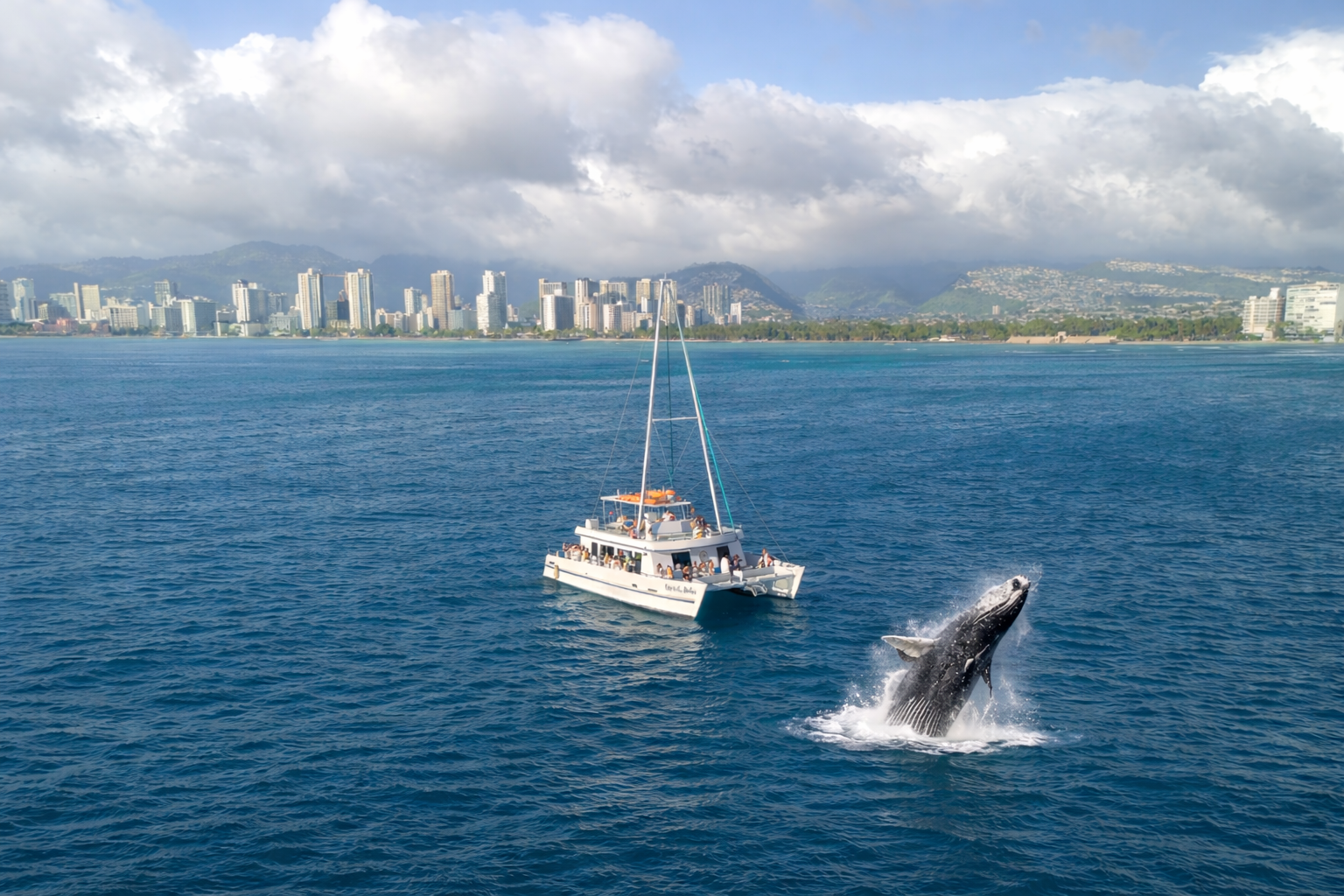
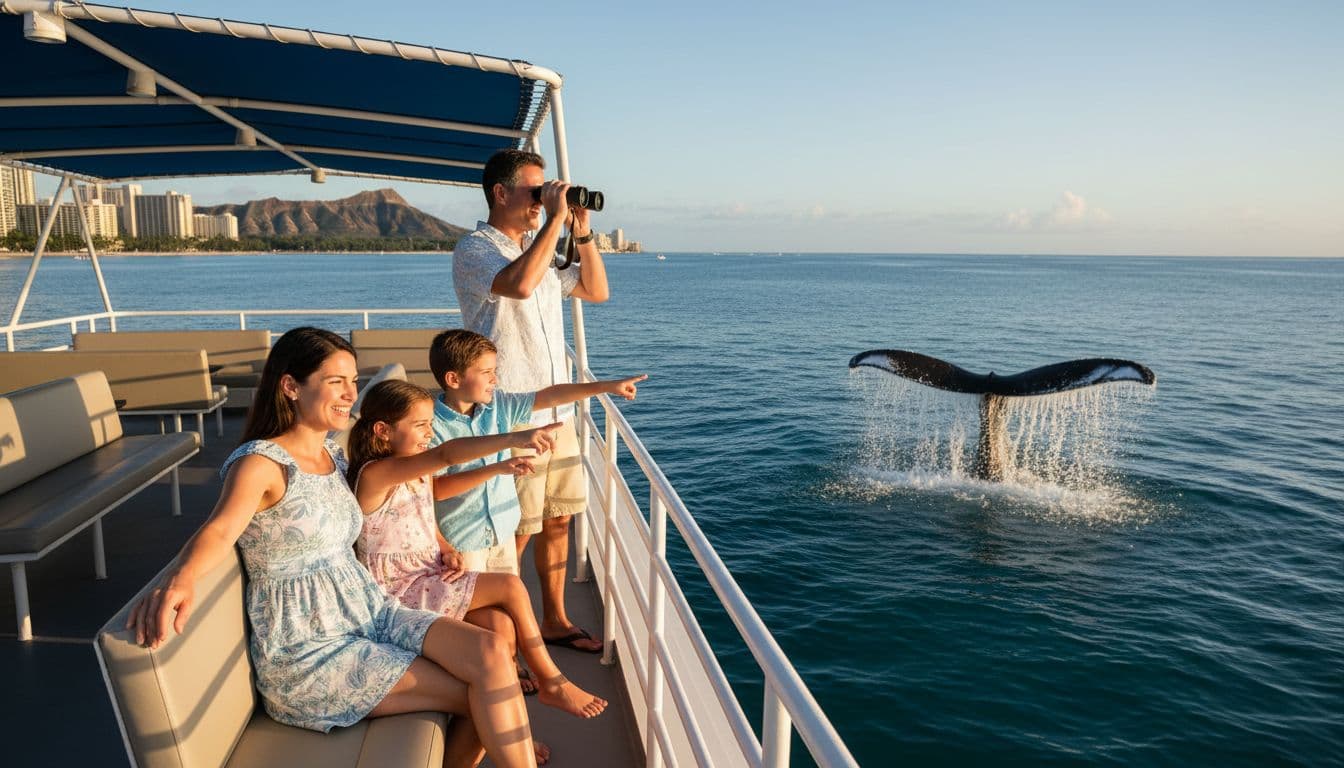
You board at Kewalo Basin shortly after 8:00 AM, when morning light slants low across the channel and the water holds its overnight calm. The catamaran clears the harbor mouth and turns west, running parallel to the Waianae Coast.
Within 20 minutes, the naturalist points to a plume of mist 200 yards off the port bow — a humpback's blow, visible as a vertical column before it dissipates.
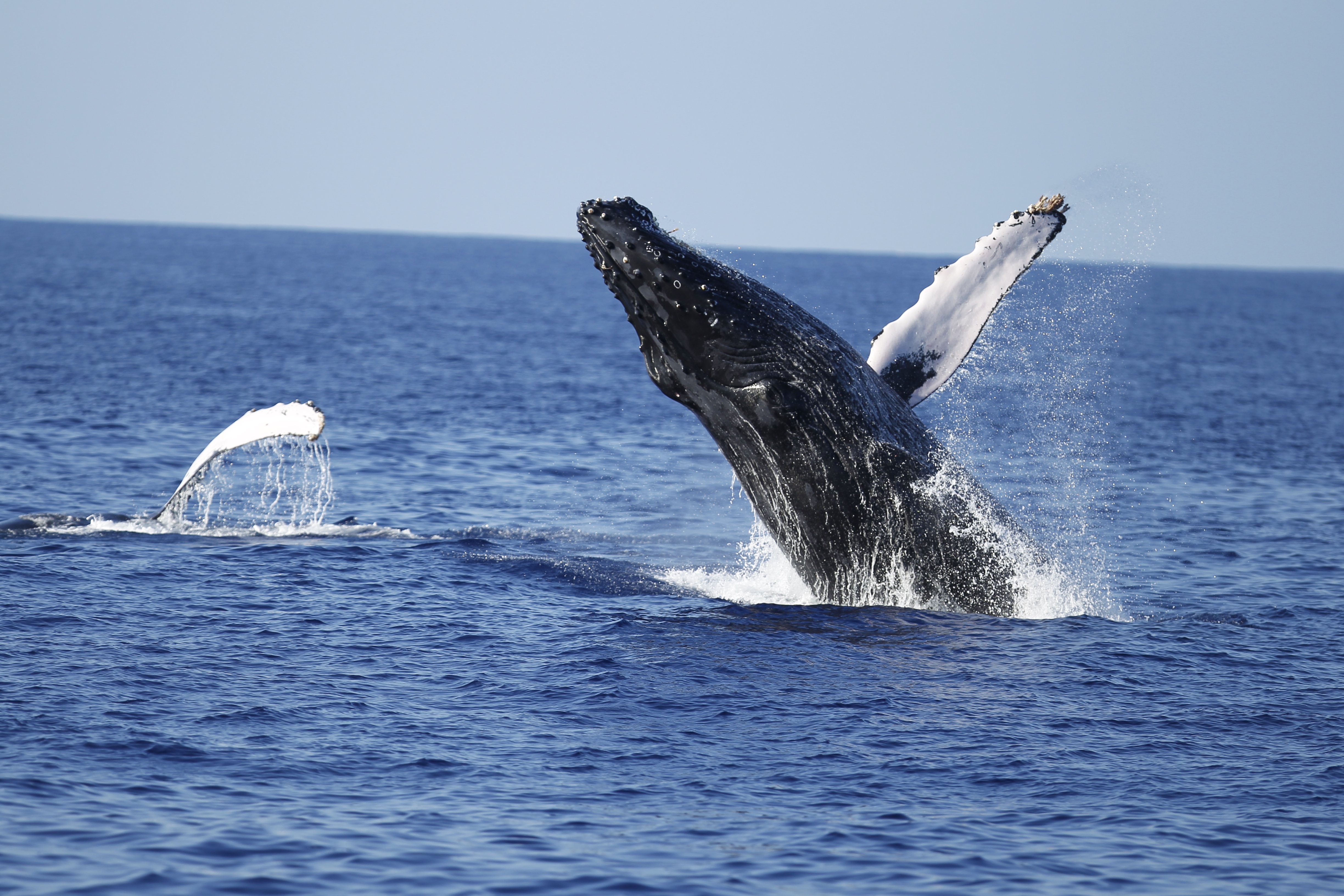
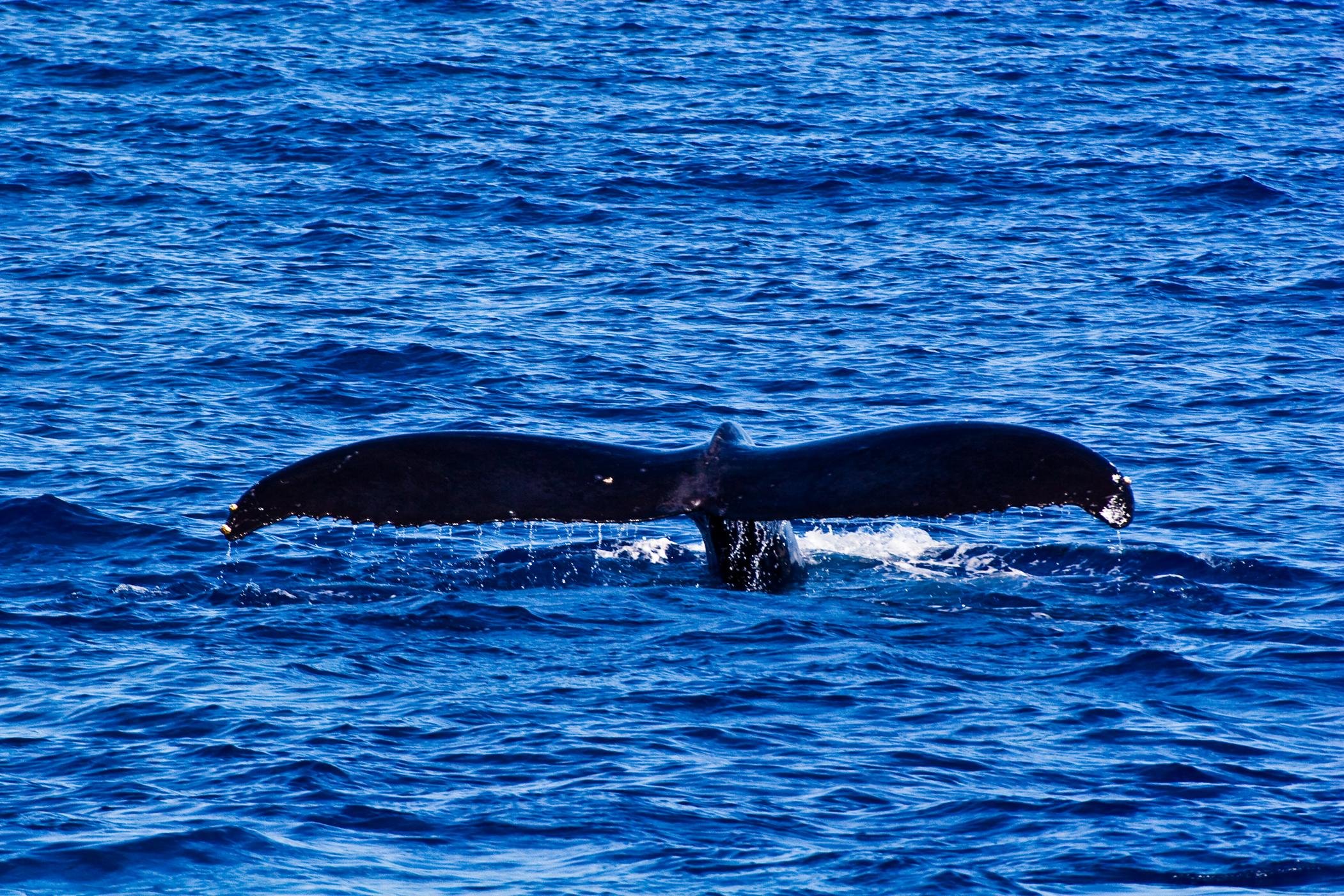
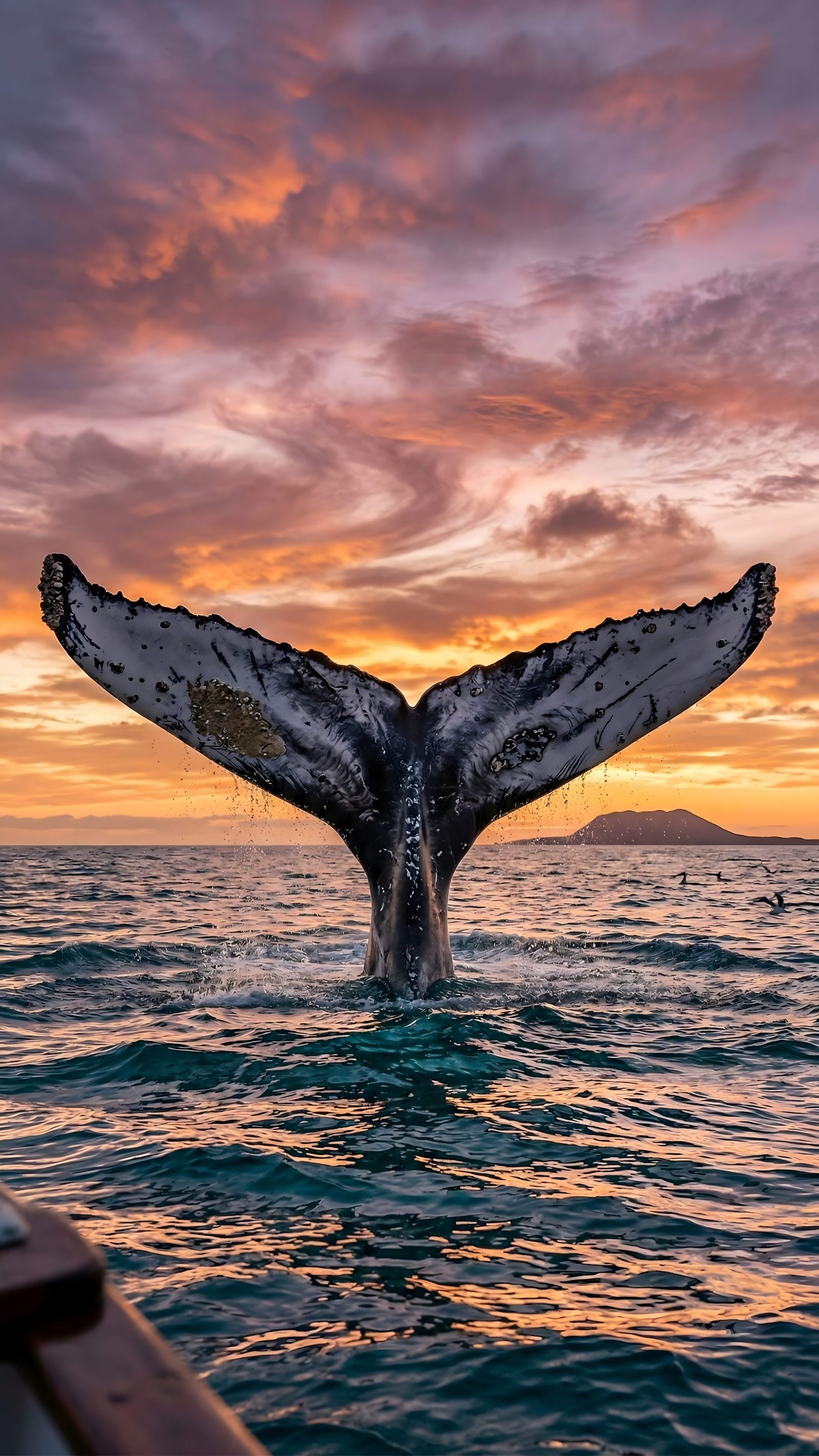
The captain cuts the engines to idle. You watch the whale surface three more times, each breath separated by two-minute intervals. On the fourth dive, the animal arches its back and raises its fluke clear of the water, showing the black-and-white ventral pattern used for identification. The naturalist photographs the fluke and cross-references it against a tablet database, confirming this is a male last sighted off Maui in 2024.
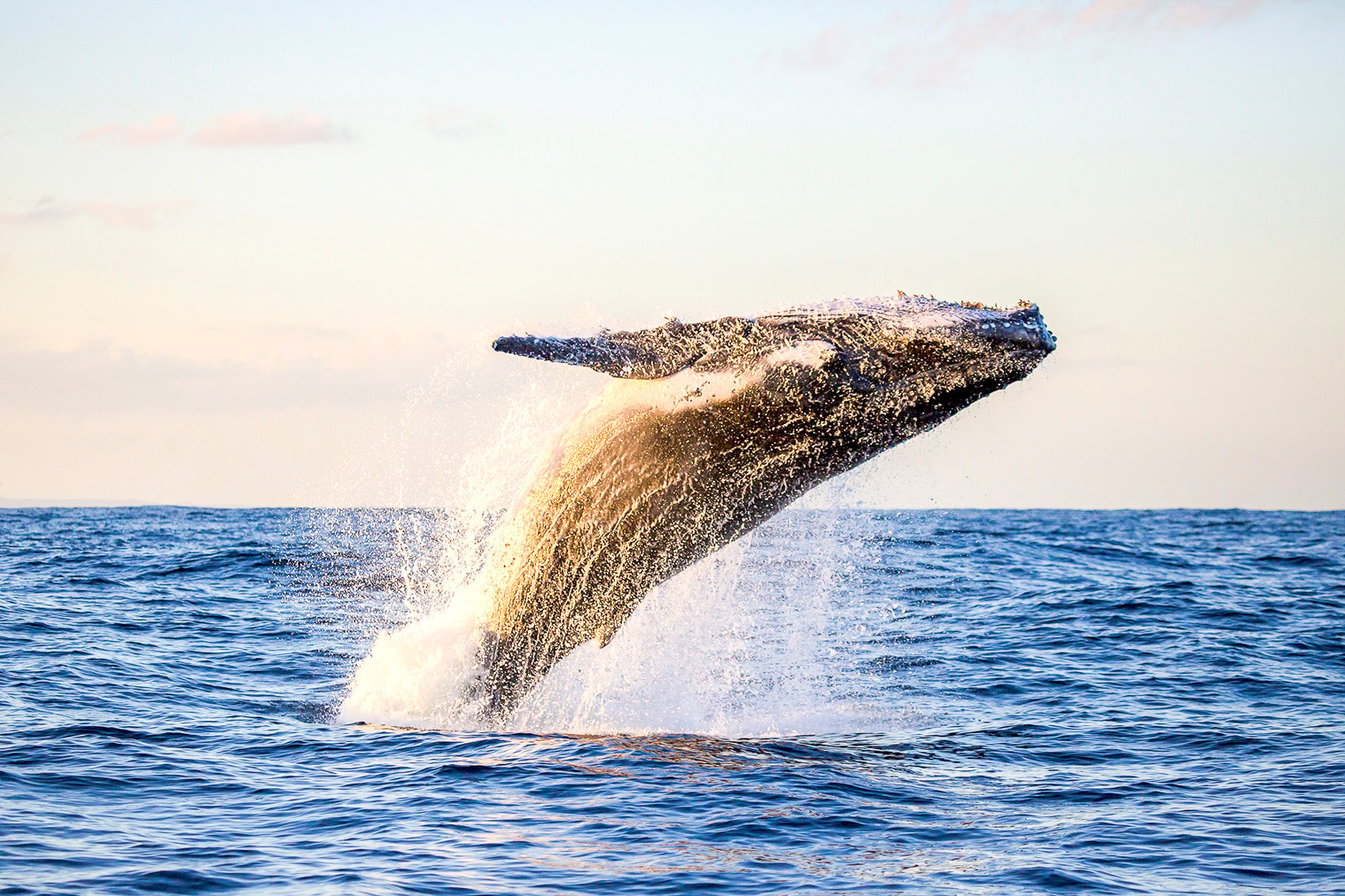
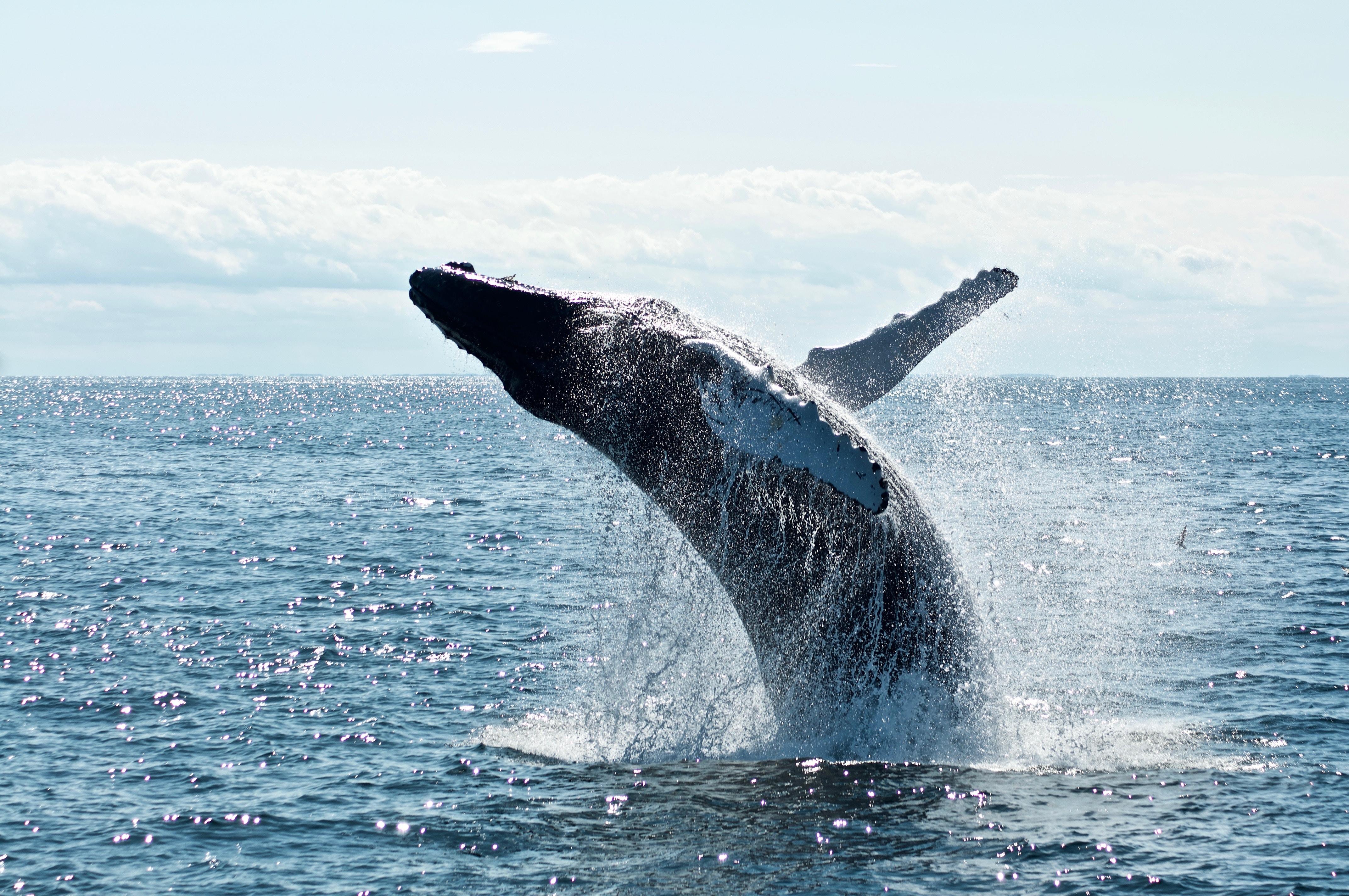
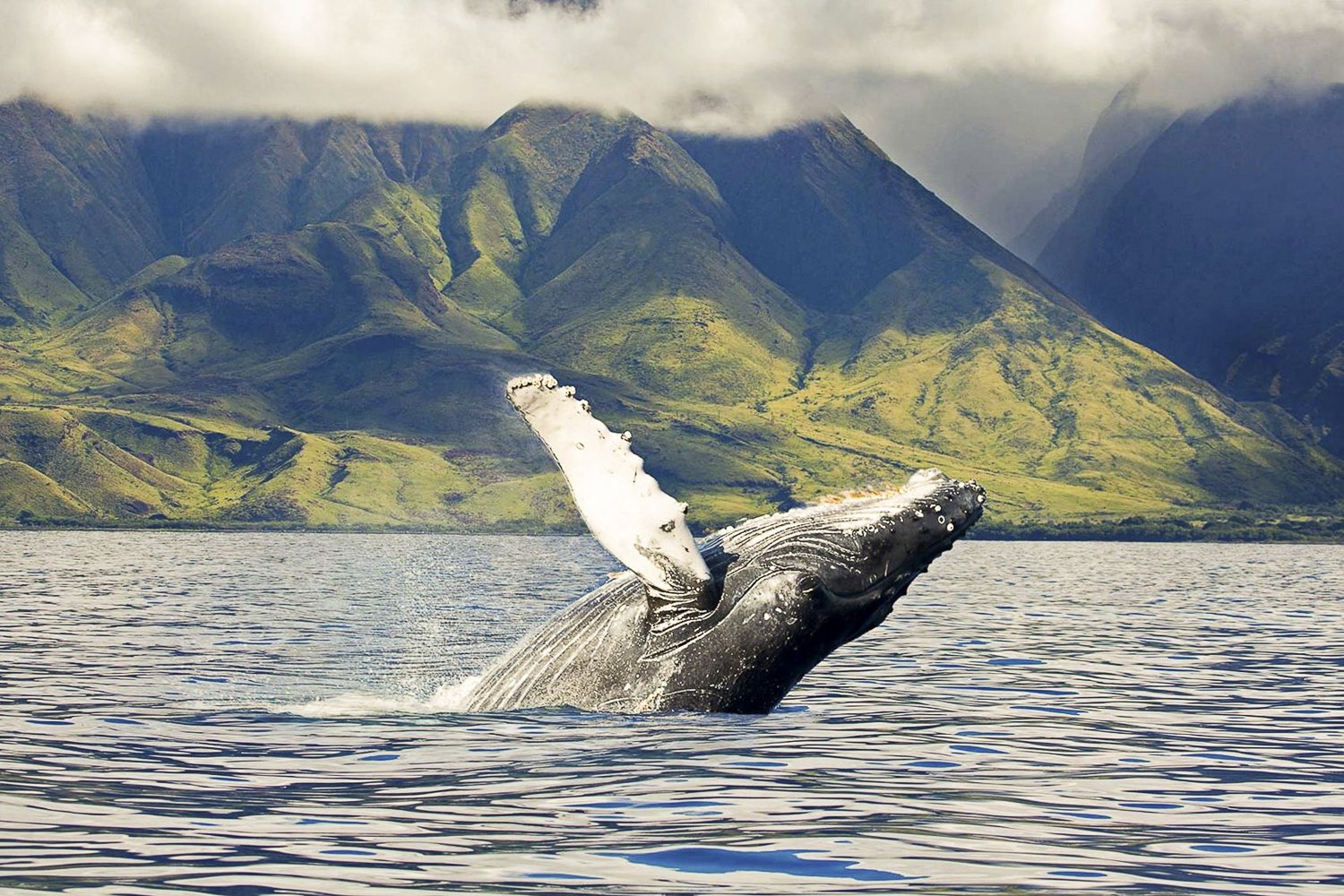
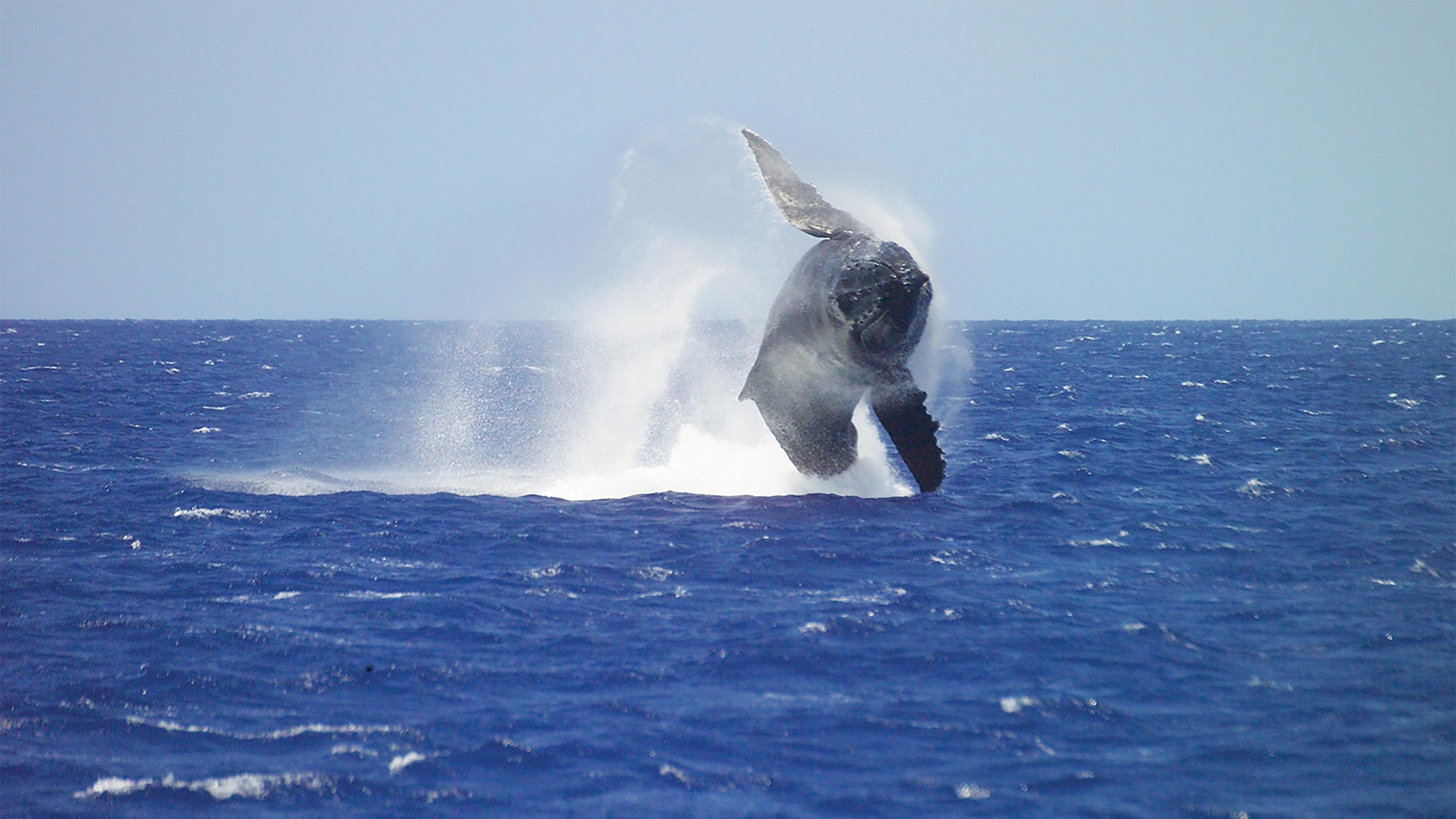
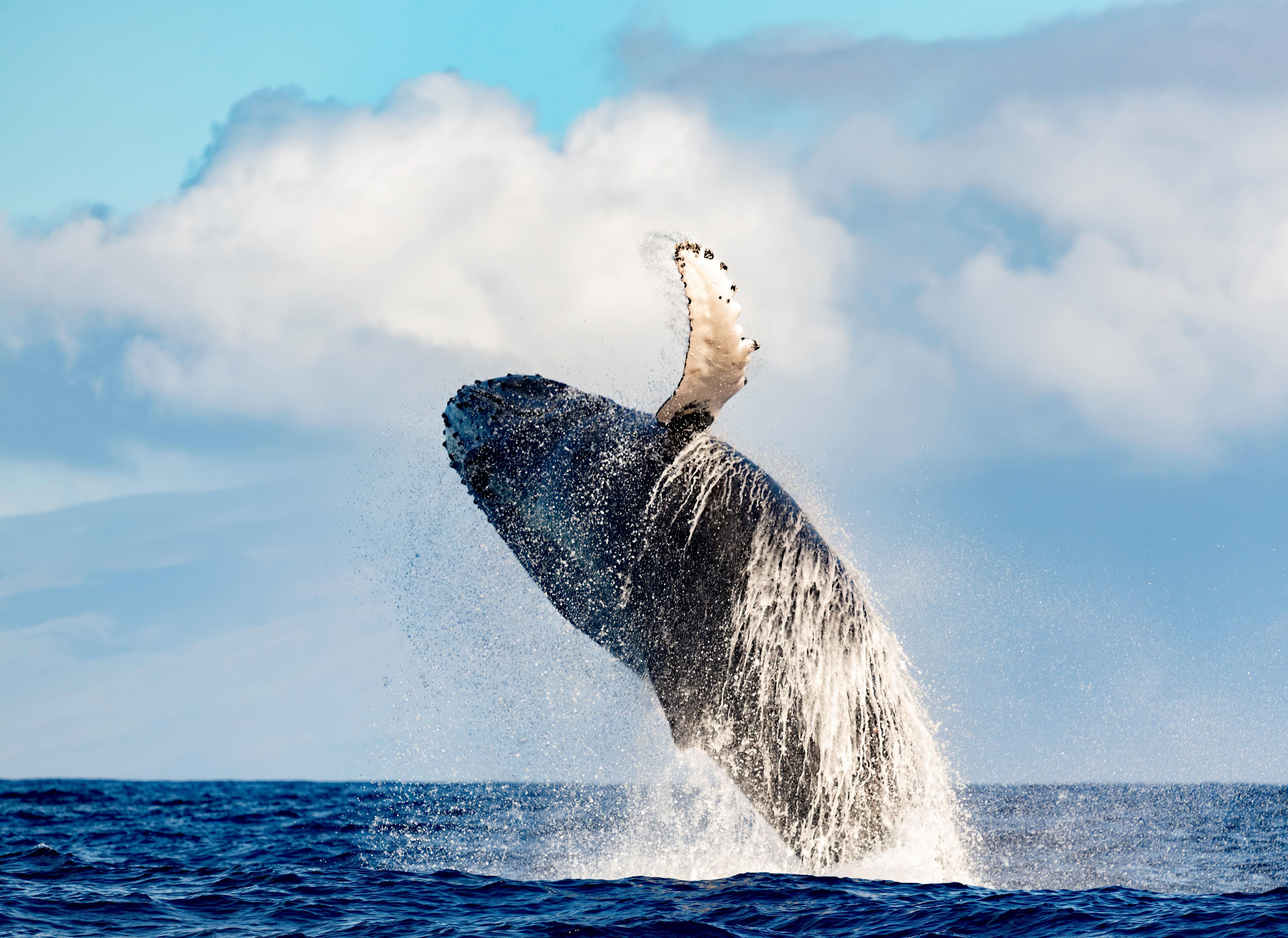
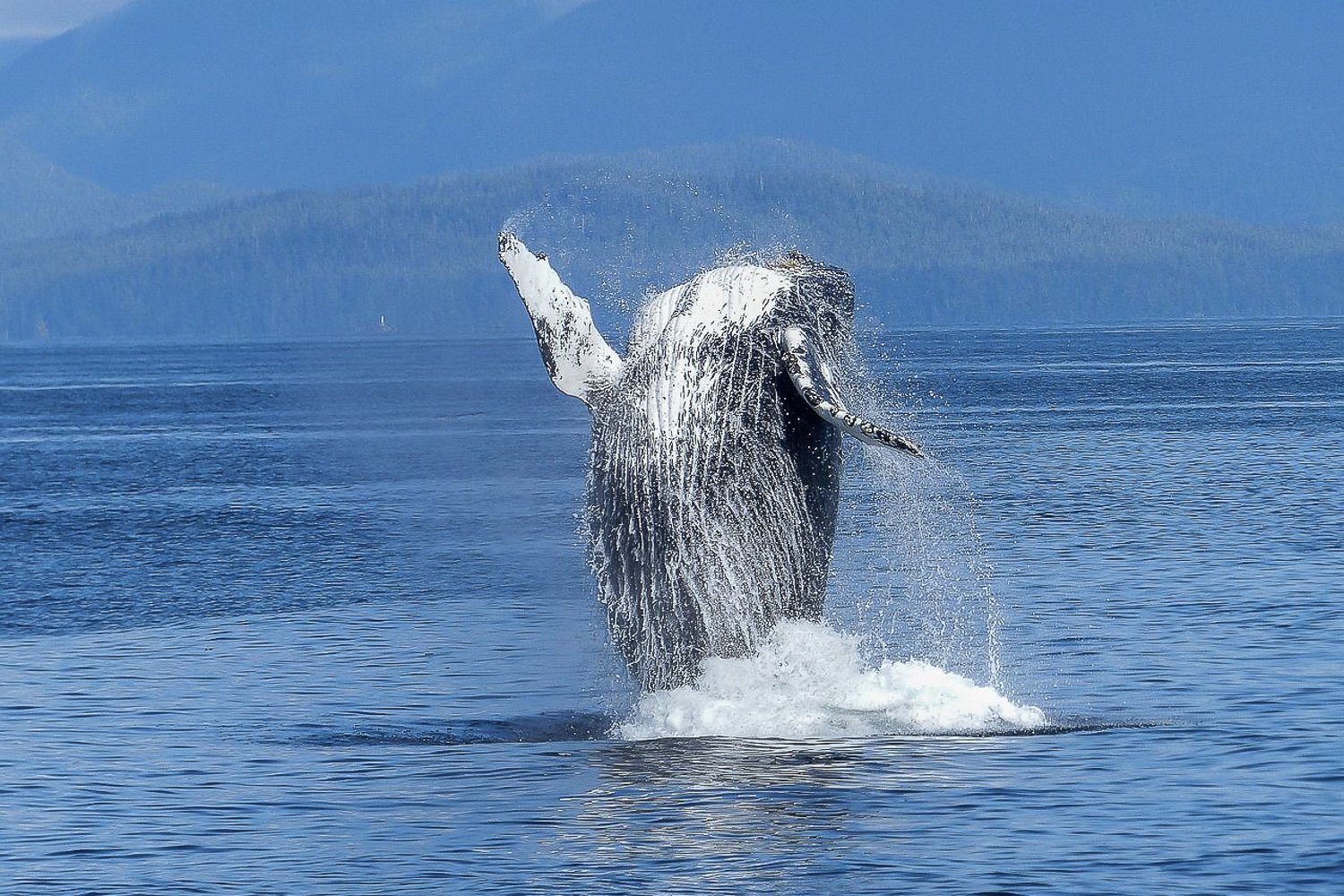
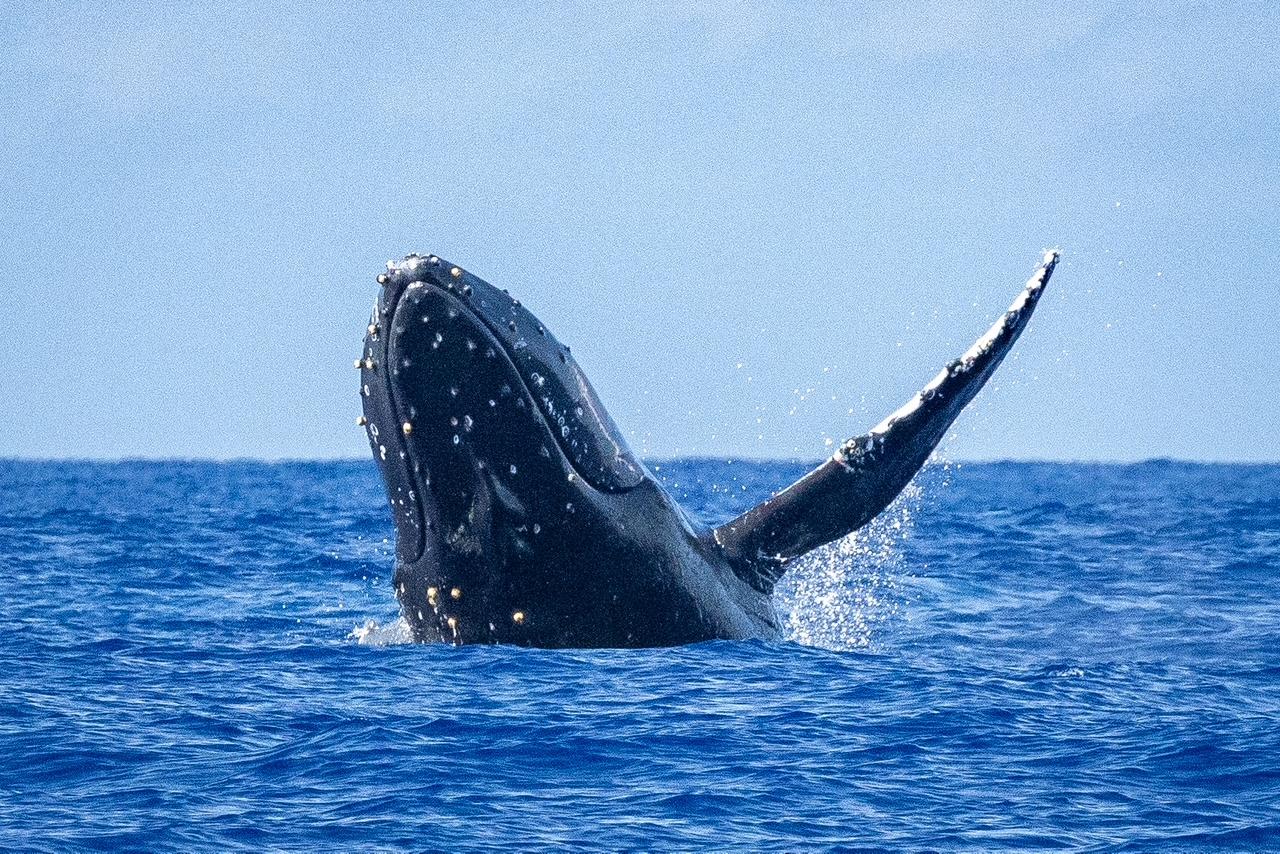
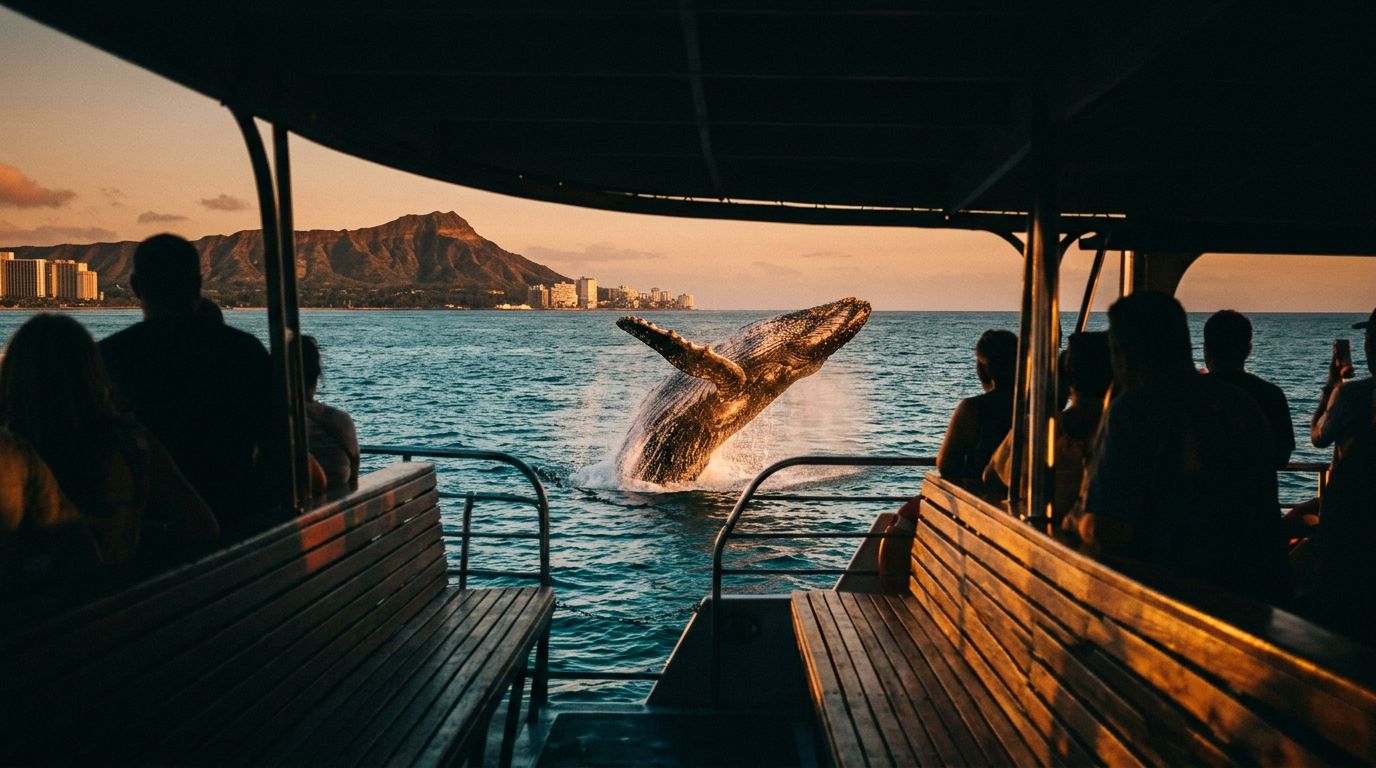
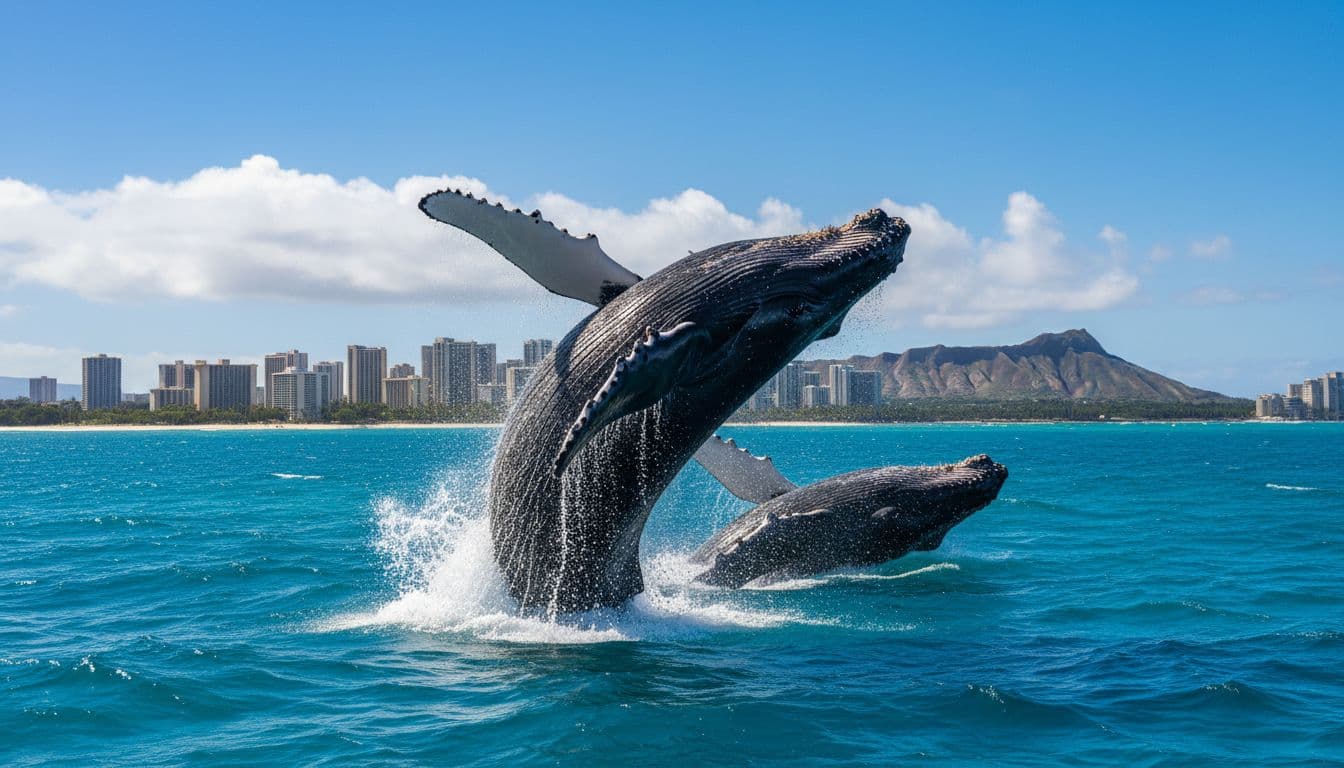
A second whale breaches 400 yards to starboard, launching its 40-ton body almost entirely clear of the surface before crashing back in a cascade of white water. The sound arrives a half-second later, a percussive thud you feel in your sternum. The boat drifts in silence, watching the pair circle each other in what the naturalist identifies as competitive sparring between males. You spend 90 minutes observing six separate animals before the return crossing to Honolulu.
All the details about your upcoming adventure in one place
Oahu whale watching tours operate December through April when humpback whales migrate to Hawaiian waters to breed and calve. Multiple vessels depart from Waikiki, Waianae, and Haleiwa harbors, offering marine naturalist narration and sightings of breaching, tail slaps, and pectoral fin displays. Most oahu whale watching tours guarantee sightings or offer a return trip, with peak activity mid-January through March.
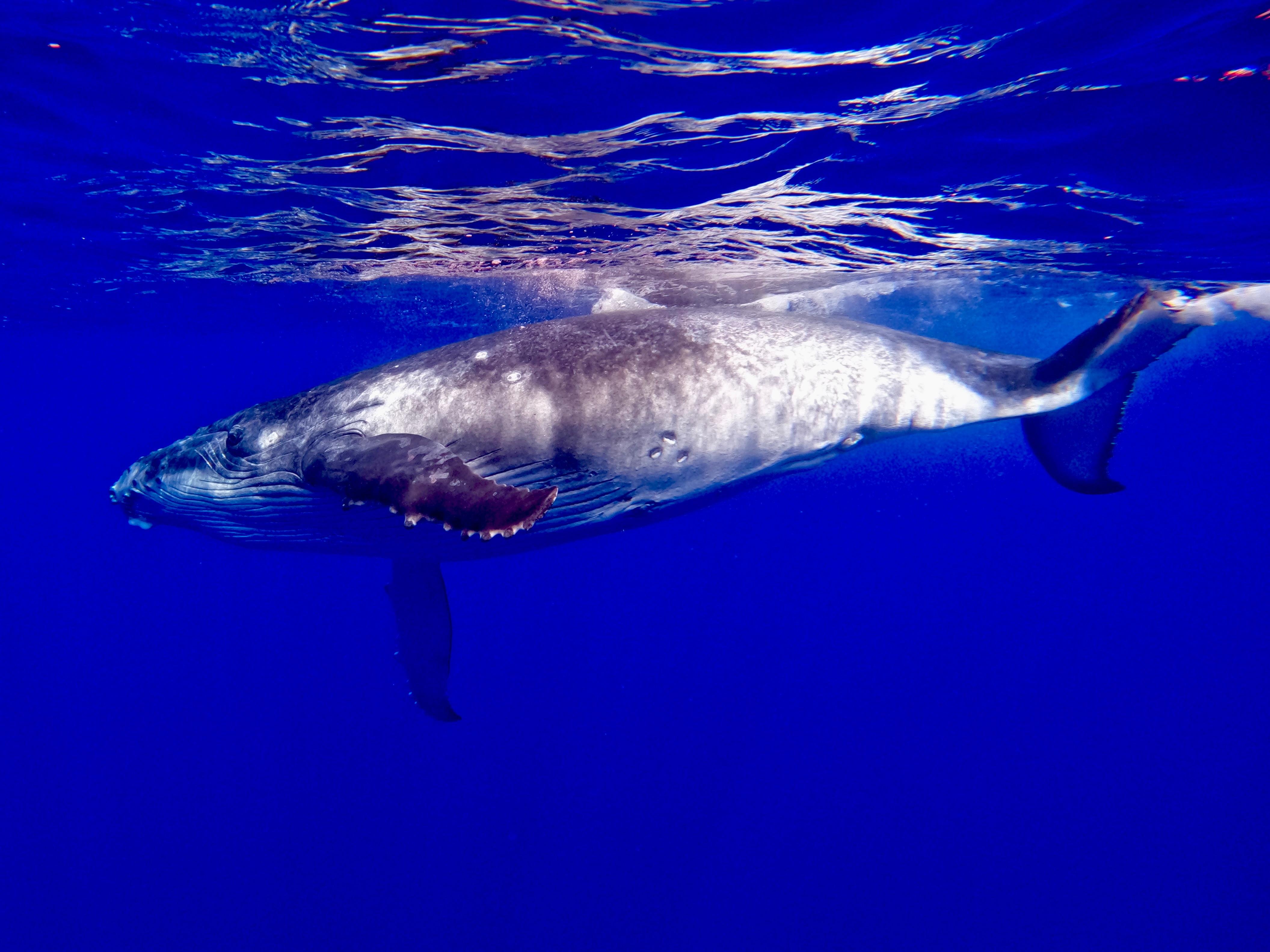
Each winter, approximately 10,000 North Pacific humpback whales complete a 3,000-mile migration from Alaska's feeding grounds to the warm Hawaiian Islands Humpback Whale National Marine Sanctuary, which encompasses 1,400 square miles of protected waters surrounding Oahu.
The sanctuary was designated in 1992 to safeguard critical breeding, calving, and nursing habitat for Megaptera novaeangliae, a species that rebounded from fewer than 1,400 individuals in 1966 to an estimated 21,000 by 2014.
Oahu's position within the sanctuary places the island at the heart of one of the world's most concentrated seasonal whale aggregations. Humpbacks arrive in November, peak between January and March, and depart by May. During these months, mothers nurse calves born in Hawaiian waters while males engage in competitive surface displays — breaching, tail slaps, and pectoral fin slaps — that can be observed from shore points including Makapuu Lighthouse Trail, Diamond Head, and the west-facing beaches of Waianae Coast. Shore-based observation requires no fee and offers unobstructed sightlines across channels where whales travel between islands.
Boat-based oahu whale watching tours operate from harbors including Honolulu's Kewalo Basin, Waianae Harbor, and Haleiwa on the North Shore. Federal law mandates vessels remain 100 yards from humpbacks, a regulation enforced by NOAA's Office of Law Enforcement. Certified marine naturalists aboard sanctioned tours interpret whale behavior in real time, identifying individual animals by fluke patterns and explaining the acoustic complexity of male humpback song, which can last 20 minutes and be heard up to 20 miles away underwater.
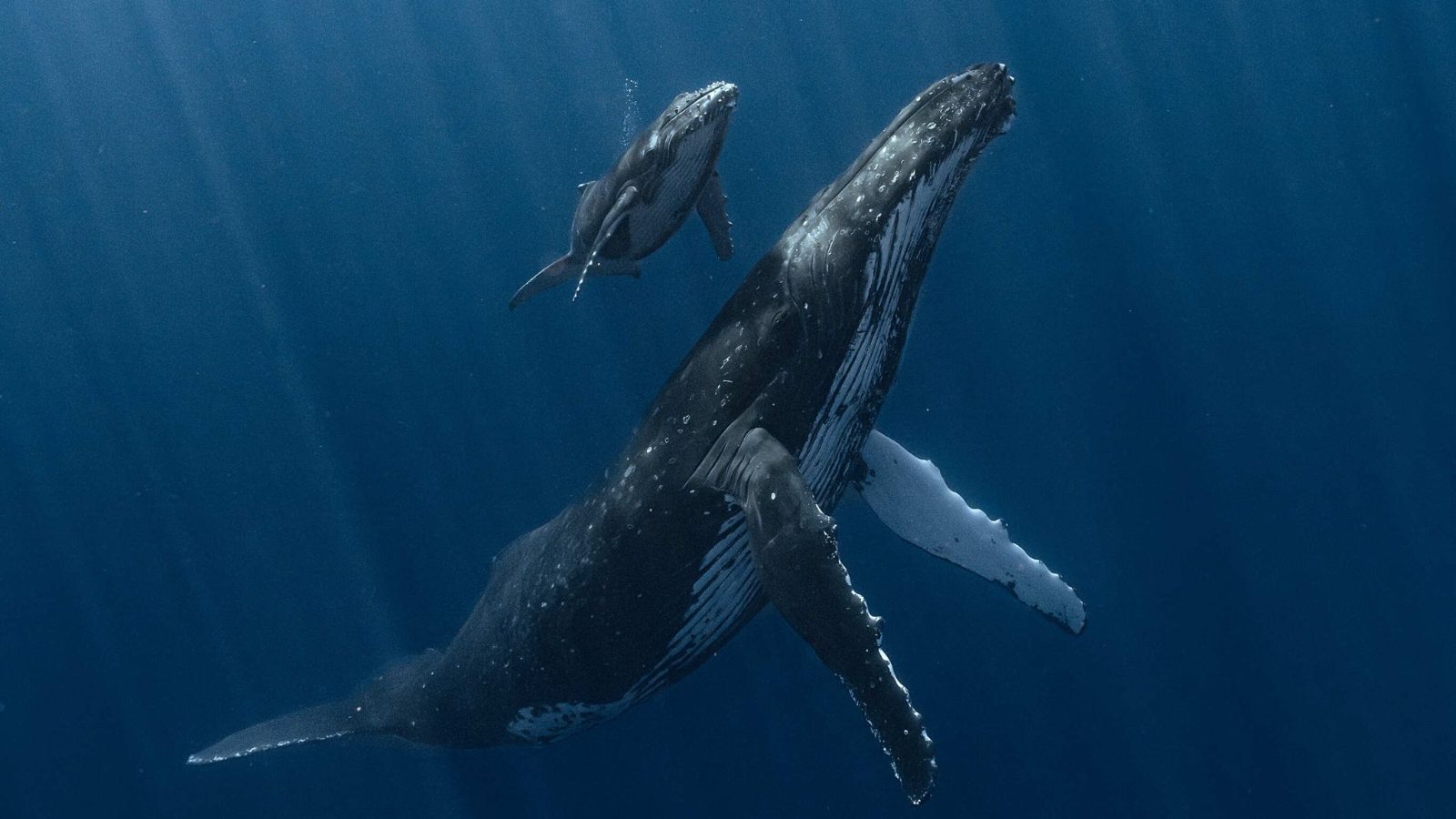
The oahu whale watching season aligns with the species' reproductive cycle. Calves measure 10–15 feet at birth and gain approximately 100 pounds per day nursing on milk with 45–60 percent fat content. Mothers do not feed during the Hawaiian season, relying entirely on blubber reserves accumulated in Alaska. This physiological constraint drives their return migration in spring, when calves are strong enough to complete the journey north. The predictability of this cycle has made Oahu a focal point for long-term research, with photo-identification databases tracking individual whales across decades and revealing site fidelity patterns that span generations.

Federal law mandates vessels remain 100 yards from humpbacks, a regulation enforced by NOAA's Office of Law Enforcement.
Wear comfortable, casual clothing and footwear that is easily removable for boarding specific vessels. A light jacket is recommended as ocean breezes can be cool even in tropical climates.
Keep bags minimal and waterproof if possible to protect against ocean spray. Check with your specific provider regarding storage for larger camera bags or backpacks.
Bring a camera with a good zoom lens to capture marine life from a distance. Respect the 100-yard distance regulation by using your zoom rather than attempting to approach whales.
Many boat tours are family-friendly, though minimum age requirements may apply for safety. Shore viewing at public lookout points is suitable for all ages.
While many shore points have paved trails like the Makapu'u Point Lighthouse Trail, accessibility on boats varies significantly. Verify vessel features before booking your oahu whale watching tickets.
Some tours include light snacks or breakfast, while others operate as BYOB. Always carry personal water bottles to stay hydrated during your excursion.
Operating Hours
08:00–17:00 daily
Address
Various harbors and shore points across Oahu, Hawaii
Accessibility
Varies by vessel; check specific oahu whale watching tours for ADA details
Best arrival window
08:00–11:00
Storage
Limited; leave bulky items at your accommodation
Navigation
Use official site gohawaii.com for harbor locations
Most operators require 24–48 hours notice for full refunds. Tours often offer re-rides if no whales are sighted, though the base fee remains non-refundable.
Recommended time
3-4 hours
Most oahu whale watching excursions require several hours to account for travel from various harbors and shore points across Oahu, Hawaii. We suggest arriving within the best arrival window of 08:00–11:00, as calmer morning waters provide better visibility for whale sightings. Travelers seeking oahu whale watching tours should anticipate that midday periods see increased marine traffic and passenger volume. Securing oahu whale watching tickets in advance helps streamline the boarding process for your chosen boat trip or observation activity.
Crowd levels through the day
Planning oahu whale watching outings requires balancing the excitement of marine life spotting with the practical needs of young travelers. Whether you choose shore-based observation or boat excursions, preparation ensures a comfortable experience for the whole family.
Select a larger vessel for oahu whale watching tours, as these provide greater stability to minimize motion sickness for children. Consider giving kids ginger chews or consulting your pediatrician about non-drowsy remedies before boarding an oahu whale watching tour.
Space on boats is limited, so leave large strollers at your accommodation and bring a carrier for infants or toddlers. Shore viewing points along the coast are often stroller-friendly for those who prefer to purchase oahu whale watching tickets for land-based observation.
Children aged five and older typically manage the duration of boat excursions best, while younger toddlers often find shore-based whale sightings more engaging. Regardless of age, bring binoculars to help children focus on distant splashes and surface breaches.
Plan your activity during the recommended morning hours of 08:00–11:00 when waters are calmest. A shorter morning trip allows for a midday rest back at your hotel to avoid overstimulation.
Real experiences from real travelers
We spotted seven humpback whales during our three-hour oahu whale watching tour departing from Waianae Harbor. The crew provided excellent marine biology commentary while maintaining respectful distances from the pods. Water was calm and visibility extended for miles along the leeward coast.
Our January tour encountered a mother humpback with her newborn calf resting between dives. The naturalist explained migration patterns from Alaska and distinctive fluke markings used for whale identification research. Catamaran offered stable viewing platforms and hydrophone allowed us to hear whale songs underwater.
Captain adjusted course based on real-time spotter network communication during peak whale season. We observed competitive pod behavior with three males pursuing a female, including pectoral fin slapping and surface lunges. The oahu whale watching experience included detailed briefing on NOAA protection guidelines.
Departed Haleiwa Harbor at sunrise for calmer seas and better lighting conditions. Spotted two separate pods plus several spinner dolphins near Kaena Point. Crew emphasized conservation efforts and citizen science photo contributions to Happywhale database.
Witnessed a juvenile humpback breach seven consecutive times within ten minutes, likely practicing breach technique or removing parasites. Our oahu whale watching tickets included guaranteed re-sail policy if no sightings occur, though this was unnecessary given February abundance.
Underwater microphone revealed complex whale songs during surface rest periods between dives. Guide identified individual whales by fluke patterns photographed during previous weeks. Stable catamaran design allowed uninterrupted viewing even when swells increased mid-tour.
Limited to 25 passengers compared to larger commercial vessels, allowing everyone unobstructed rail positions. Observed bubble-net feeding behavior as whales surfaced with mouths open, though this is rarer in Hawaiian waters than Alaska. Naturalist answered questions about baleen structure and krill consumption.
Mature male repeatedly slapped pectoral fins and tail flukes on water surface, creating loud reports audible across the channel. Crew explained this percussive behavior signals dominance during mating competition. The oahu whale watching tours operate December through April when North Pacific humpbacks calve in warm Hawaiian waters.
In addition to five humpback whale sightings, our tour encountered a pod of false killer whales and several green sea turtles near the surface. Captain maneuvered to provide viewing angles with sun behind us for optimal photography conditions and reduced glare.
Final dive sequence showed the whale arching its back and raising tail flukes perpendicular to water before a deep descent lasting eight minutes. Barnacle patterns and scars visible on the fluke underside create unique identification markers tracked by marine researchers across Pacific migration routes.
Everything you need to know for your journey
The peak season for oahu whale watching is January through March.
Prices for an oahu whale watching tour typically range from 40 to 150 USD depending on the vessel and inclusions.
Shore viewing is 0 USD at public points, though boat tours charge variable fees.
Calmer morning waters between 08:00–11:00 provide better visibility for whale sightings.
Yes, locations like the Makapu'u Point Lighthouse Trail offer free land-based viewing opportunities.
Policies vary by operator; confirm age requirements when purchasing your oahu whale watching tickets.
Many operators offer a re-ride guarantee, allowing you to return for a future trip at no cost.
Take medication at least one hour before your oahu whale watching excursion to ensure effectiveness.
Accessibility is high for land-based viewing, but boat access depends on the specific vessel's design.
Many providers allow guests to bring their own drinks and snacks, but glass is typically prohibited on any oahu whale watching vessel.
Join thousands of happy travelers who have discovered this incredible experience
Book Your Experience Now