

Quick answer
Shore-based whale watching on Oahu succeeds best from mid-January through March, when humpback whales concentrate in warm shallow waters within a few miles of the coastline. The Makapu'u Point Lighthouse Trail, Ka'ena Point, and Diamond Head's eastern slopes provide the highest vantage points and widest sightlines. Arrive between 7:00 and 10:00 AM for clearer visibility and calmer wind conditions before midday trade winds pick up.
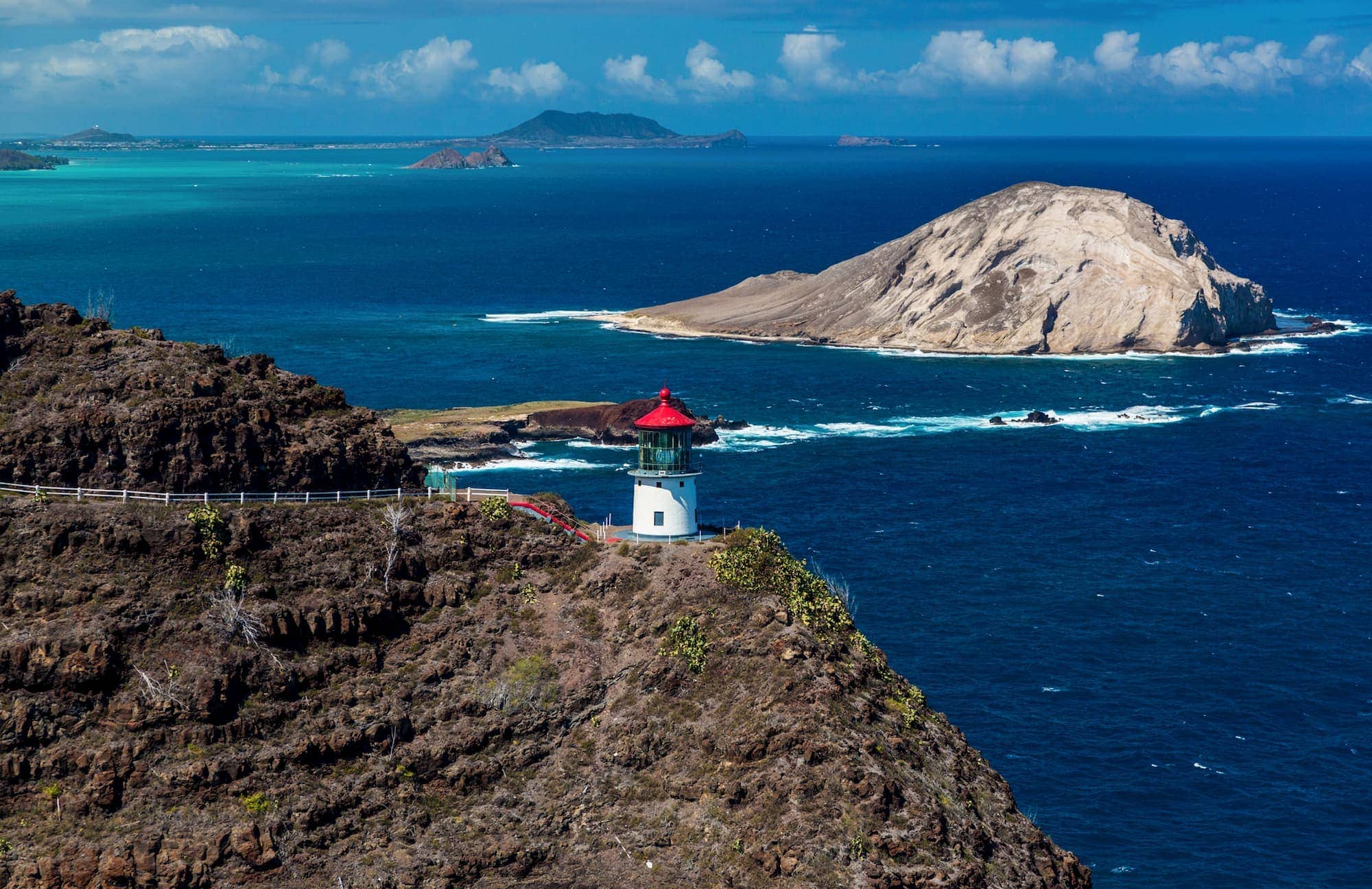
Each winter approximately ten thousand humpback whales travel from Alaskan feeding grounds to Hawaiian waters, and Oahu's windward and southern shorelines capture a significant portion of that migration corridor. What separates successful shore watchers from those who leave disappointed is understanding where whales prefer to linger and when coastal geography works in the viewer's favor. Oahu whale watching from shore rewards elevation and patience in equal measure. Humpbacks breach, tail-slap, and nurse calves in waters anywhere from a few hundred yards to three miles offshore, and a high vantage point compresses that distance visually. The Makapu'u Point Lighthouse Trail climbs 420 feet above sea level along a paved mile-long path, offering unobstructed eastern and southeastern ocean views where mothers and calves rest in relatively protected channels. Binoculars become essential here—the naked eye catches spouts and occasional breaches, but magnification reveals pectoral fin waves, synchronized breathing, and competitive pod behavior that defines the late-season mating activity. Coastal whale watching on Oahu functions on a tighter seasonal window than boat tours claim. While the official season spans December through May, shore watchers see the highest activity from mid-January through late March when whale density peaks and mothers with newborn calves hug the coastline. Early morning hours between seven and ten offer the calmest ocean surface and best light angles—afternoon trade winds roughen the water and obscure spouts, and low sun creates glare that hides distant activity. Free access to public lookouts removes the cost barrier but imposes a different requirement: the discipline to scan methodically and wait. A single whale may surface for three to five breath cycles then disappear for twelve minutes during a deep dive. Watch zones rather than chasing individual spouts, and position yourself where wide ocean stretches meet the horizon. The Ka Iwi State Scenic Shoreline that encompasses Makapu'u remains open daily with no entrance fee, though parking fills quickly during peak whale weeks in February.
“A high vantage point compresses offshore distance visually, turning three-mile sightlines into front-row seats for breach behavior and tail slaps.”
The Best Time for Oahu Whale Watching From Shore
The peak season for humpback whale migration in Hawaii occurs from December through April. To maximize spotting success from shore, the best arrival window is 07:00–10:00 to utilize clearer morning visibility and cooler temperatures.
Peak Season (Dec–Apr)
High density of visitorsMild temperatures 70°F–80°F
Humpback whales are actively migrating through Hawaiian waters during these months. Shoreline viewing is most productive when surface winds remain calm early in the day.
Midday (10:00–14:00)
Peak visitor congestionWarmer temperatures 75°F–85°F
Surface glare often increases during these hours, making it more difficult to spot whale spouts or breaches. Crowds at coastal lookouts are typically largest during this period.
Early Morning (07:00–10:00)
Lower visitor volume—
Morning air is generally cooler with better light conditions for scanning the horizon. This period provides the most favorable visibility before peak midday heat develops.
Verdict: The best time for shore-based whale watching is between January and March, arriving during the 07:00–10:00 window.
Operating Hours for Oahu Whale Watching From Shore Sites
Public coastal viewpoints for whale watching, such as the Makapu'u Point Lighthouse Trail, remain accessible to visitors throughout the entire week.
| Monday | 00:00–23:59 | |
|---|---|---|
| Tuesday | 00:00–23:59 | |
| Wednesday | 00:00–23:59 | |
| Thursday | 00:00–23:59 | |
| Friday | 00:00–23:59 | |
| Saturday | 00:00–23:59 | |
| Sunday | 00:00–23:59 |
Cost of Oahu Whale Watching From Shore
Watching whales from Oahu's public coastal viewpoints does not require an admission ticket. Costs for this activity are limited to personal transportation expenses.
A typical adult pays 0 USD to watch whales from shore, as these locations are maintained as free public spaces.
Getting to Oahu Whale Watching From Shore Locations
The primary location for shore-based whale observation is the Makapu'u Point Lighthouse Trail. It is located at Makapu'u Point Lighthouse Trail, Waimanalo, HI 96795, USA, and is most easily accessed by personal vehicle.
Kalanianaʻole Highway (HI-72) to the Makapuʻu Point Lighthouse Trail parking lot
TheBus Route 23 or 231 to the Makapuʻu Lighthouse Park stop
Essential Tips for Oahu Whale Watching From Shore
Effective shore-based whale watching relies on specialized gear and strategic positioning to maximize your chances of spotting activity on the horizon.
Binocular selection
Use stabilized binoculars with 8x or 10x magnification to maintain a steady view of the water while minimizing hand shake. Fixed focus models allow for faster scanning of the ocean surface when movement is detected.
Polarized eyewear
Wear high-quality polarized sunglasses to significantly reduce glare and surface reflections on the ocean. This process makes it easier to distinguish a whale blow or breach from the surrounding whitecaps.
Elevated vantage points
Prioritize coastal lookout points with high elevation to increase your field of view and line of sight across the water. A higher perspective allows you to monitor a larger expanse of the horizon compared to beach-level observation.
Systematic scanning
Scan the horizon in slow, overlapping horizontal sweeps rather than staring at one fixed point. This method improves the likelihood of catching subtle cues like dorsal fins or tail flukes breaking the surface.
Listen for cues
In calm conditions, keep ambient noise to a minimum to listen for the distinct sound of a whale exhaling or splashing. Audio cues often serve as an early warning system before visual confirmation is possible.
Check availability
Frequently asked questions about oahu whale watching from shore
Everything you need to know about oahu whale watching from shore