

Quick answer
Yes, you can see whales in Oahu from December through April, when humpback whales migrate to Hawaiian waters to breed and calve. Shore viewing is free and accessible year-round along the island's coasts. Peak sightings occur January through March, with morning hours between 7:00 and 11:00 offering the calmest sea conditions and best natural lighting for spotting breaches, tail slaps, and blows from elevated coastal points.
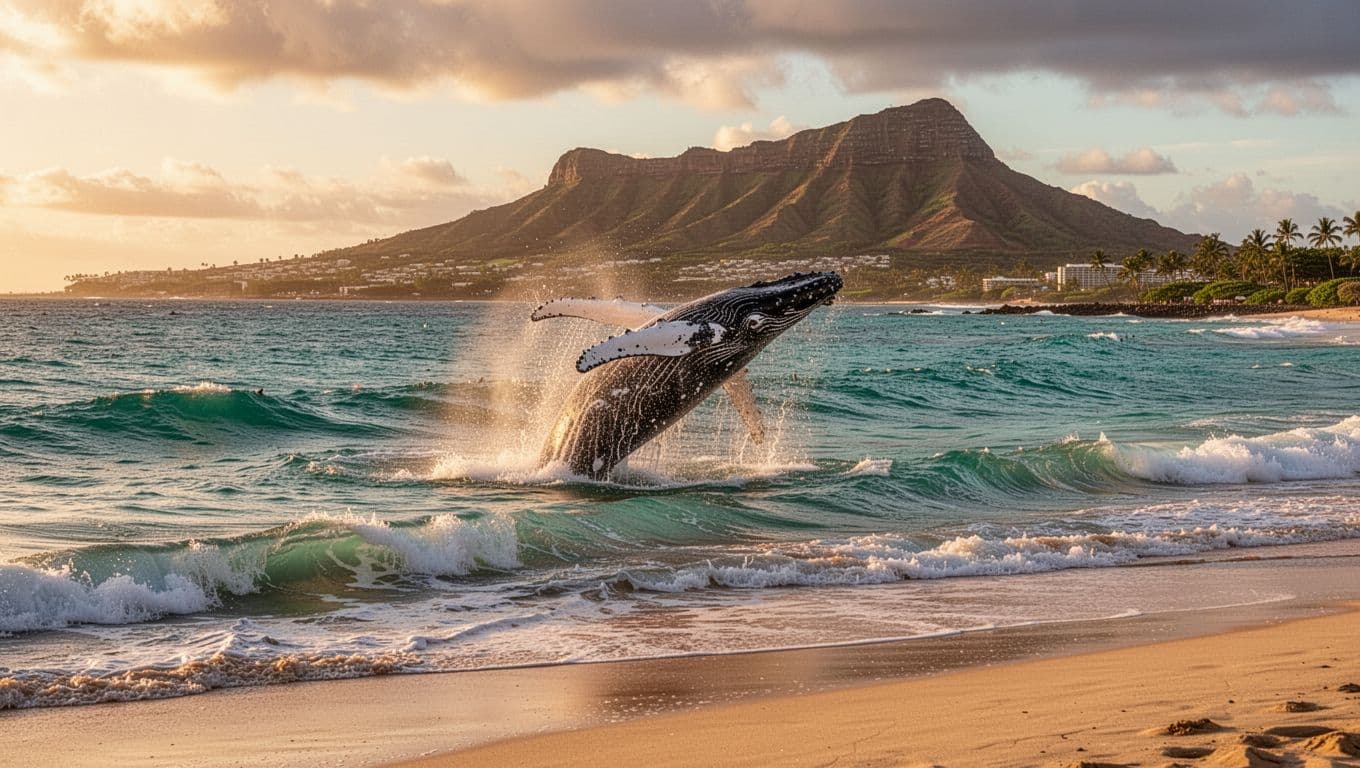
Humpback whales return to Oahu's waters with such regularity that the Hawaii Marine Mammal Response Network records thousands of confirmed sightings each season. The entire southeastern coastline becomes a natural amphitheater during peak migration months, with whales visible from beaches, clifftops, and lighthouse overlooks without binoculars or boat access. Oahu whale watching from shore relies on elevation and unobstructed sightlines. Makapuu Lighthouse Trail, Diamond Head Summit, and the Lanai Lookout on the southeastern shore provide the height needed to spot blows—the vertical spray that marks a surfacing whale—from distances exceeding a mile. Sandy Beach Park and Hanauma Bay offer ground-level viewing where patient observers catch breaches close to the reef edge. Mothers with calves prefer shallow, protected bays along the windward coast, while competitive pods of males perform acrobatic displays in deeper offshore channels visible from the North Shore. The migration timeline follows a predictable arc. Early December arrivals are scouts—mature males and non-breeding adults. January brings nursing mothers and newborn calves, which remain in nearshore waters through March. By mid-April, the majority have begun their return journey north, though stragglers linger into early May. Water clarity peaks on calm mornings when offshore winds flatten the surface, turning the ocean into a lens. Overcast skies reduce glare and make it easier to distinguish whale activity from whitecaps and debris. Whale behavior dictates viewing success as much as location does. Breaches—full-body leaps that produce towering splashes—occur most frequently during competitive displays and calf play. Tail slaps signal communication between pod members. Pec slaps, where a whale rolls sideways and strikes the water with its long pectoral fin, create a distinctive sound audible from shore. Each behavior has a rhythm, and the longer you watch a single area, the more patterns emerge. The whales are here, present and active. The variable is your positioning and timing, both of which the island's topography makes straightforward to optimize.
“The entire southeastern coastline becomes a natural amphitheater during peak migration months, with whales visible from beaches, clifftops, and lighthouse overlooks without binoculars or boat access.”
When Can You See Whales in Oahu: Seasonal and Daily Best Times
The North Pacific humpback whale season in Oahu typically spans from December through April, with peak activity occurring between February and March. For the highest probability of sightings, plan your activities during the recommended daily window of 07:00–11:00.
Peak Season (Feb–Mar)
High activity levelsMild, 75°F–80°F, ideal ocean visibility
Humpback whales are most active and visible during these months.
Early Season (Dec–Jan)
Moderate activity levelsCooler, 70°F–75°F, occasional winter rain
Whales begin arriving in Hawaiian waters during this period.
Late Season (April)
Lower activity levelsWarmer, 75°F–82°F, calm sea conditions
Sightings become less frequent as whales migrate north.
Daily Window (07:00–11:00)
——
This period offers optimal lighting and calm sea conditions for spotting whales from shore.
Verdict: The best time for whale watching is February or March between 07:00–11:00 for optimal viewing conditions.
Costs for When You Can See Whales in Oahu
Costs for whale observation in Oahu depend on whether you choose shore-based viewing or a guided boat excursion. Shore viewing remains accessible to the public without any associated entry fees.
You pay 0 USD for land-based spotting, while boat tours require fees that vary by the specific operator selected.
Where Can You See Whales in Oahu: Getting to Prime Shoreline Spots
Oahu offers various shore-viewing locations accessible via the island's primary coastal highways. Most visitors reach these vantage points by rental car or public transit.
Kalanianaʻole Highway (HI-72) to Makapuʻu Point
Route 23 to Sea Life Park Hawaii stop
Farrington Highway (HI-93) to Kaʻena Point
Insider Tips for When You Can See Whales in Oahu
Experienced observers increase their chances of spotting humpback whales by focusing on specific visual cues and utilizing the right equipment.
Binocular specifications
Carry binoculars with 8x42 magnification for the best balance of image stability and light gathering during morning hours. Higher magnification often makes it difficult to track movement while on a moving vessel or windy shore.
Scan for blow
Look for the vertical spray of a whale's blow, which appears as a white mist against the dark ocean surface. This is often the first indicator of presence before seeing any part of the animal's body.
Observe surface behaviors
Watch for splashes or breaks in the water's surface rhythm that differ from whitecaps. Behaviors like breaching, tail slapping, and pec slapping create distinct white water patterns that persist longer than standard waves.
Maintain consistent focus
Dedicate time to scanning a specific sector of the horizon rather than sweeping your eyes rapidly. Whales often surface multiple times in the same vicinity, so keeping your gaze fixed increases the likelihood of catching a second or third appearance.
Identify directional travel
Note the direction of a whale's travel by observing the angle of its fluke or head during a breach. Consistent tracking helps predict where the animal may resurface based on its previous trajectory.
Checklist for When You Can See Whales in Oahu
Prepare these essentials to make the most of whale watching from Oahu's shores or on a tour.
-
Bring binoculars or a camera with zoom — Whales surface 100+ yards offshore, so magnification helps spot spouts and breaches.
-
Wear sunscreen and a wide-brimmed hat — Morning sun exposure is intense during the 07:00–11:00 optimal viewing window.
-
Pack a light windbreaker or jacket — Coastal winds pick up even on warm days, especially on boat tours.
-
Arrive at your chosen spot by 07:00 — Calm morning seas and favorable lighting increase spotting success from shore or boat.
-
Book whale watching tours in advance — Operators fill up quickly during December–April peak season, particularly on weekends.
-
Carry water and light snacks — Shore watching or multi-hour boat tours require hydration, and facilities vary by location.
Check availability
Frequently asked questions about whale watching in Oahu
Everything you need to know about can you see whales in oahu